
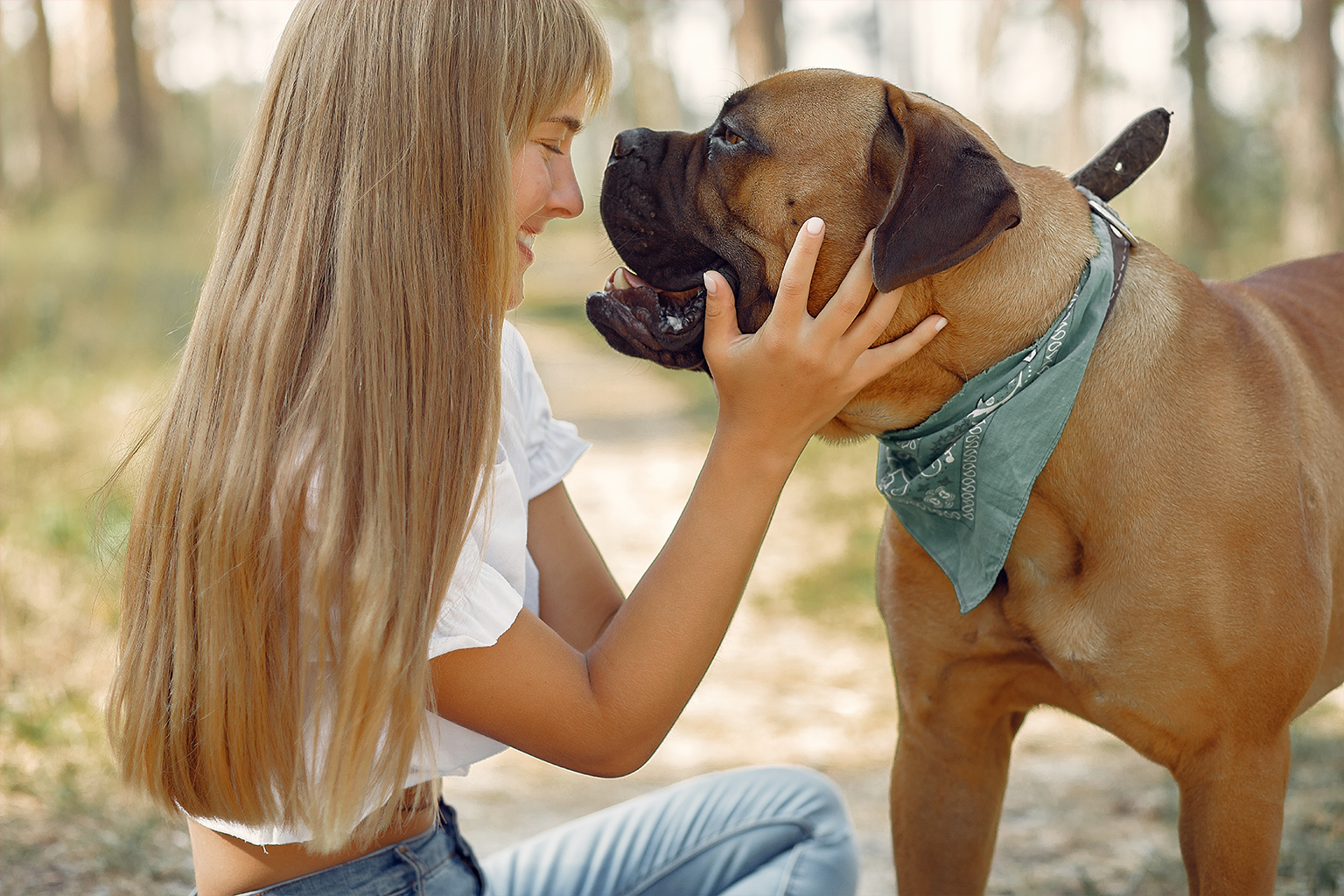
Something remarkable is happening in laboratories, veterinary clinics, and living rooms around the world. Scientists who once studied animal behaviour from a careful, clinical distance are arriving at conclusions that dog owners have quietly known for years: the bond between humans and dogs is not a sentimental idea. It is a measurable, biological, neurological reality—one that runs deeper than almost any interspecies relationship ever documented.
And as that understanding grows, it is changing everything. How we train dogs. How we design their environments. How we define their welfare. Even how we think about our own mental health.
“We are in the most exciting period in the history of dog science,” says one veterinary behaviourist who has spent two decades studying canine cognition. “The tools we have now—brain imaging, genomic sequencing, long-term observational studies—are allowing us to ask questions that would have seemed almost philosophical twenty years ago. And the answers keep surprising us.”
This is the story of what those answers are revealing, why they matter, and what they might mean for the future of life with dogs.
To understand where the science is heading, it helps to understand where it began—and how long the relationship it’s studying has actually existed.
Dogs are the oldest domesticated animal on earth, with a history alongside humans that stretches back somewhere between 15,000 and 40,000 years, depending on which archaeological and genetic evidence you weight most heavily. That is a partnership older than agriculture, older than written language, older than most of what we call civilisation. And unlike virtually every other domesticated species—which humans brought under control through confinement and selective pressure—dogs appear to have initiated at least part of their own domestication, drifting voluntarily toward human settlements in search of food and, eventually, genuine companionship.
That origins story matters because it shapes how researchers think about the relationship today. This was not a transaction that humans imposed unilaterally on another species. It was a convergence—two social animals finding, over millennia, that their lives went better together than apart.
The partnership between dogs and humans is older than agriculture, older than written language—and unlike any other in the animal kingdom.
What has emerged from that convergence is something science is only now beginning to quantify. Dogs have evolved not just to tolerate human company but to actively seek it, read it, and respond to it with a sophistication that continues to astonish researchers. They track our gaze. They follow our pointing gestures—a skill that even our closest primate relatives struggle with unless specifically trained. They adjust their behaviour based on our emotional state. They know, in ways that can be measured in brain scans and hormone levels, who we are to them.
The most striking discoveries of the past decade have come not from observational studies in parks or training fields, but from brain imaging research—specifically, from a handful of pioneering scientists who figured out how to get dogs to lie still inside fMRI machines while awake and unrestrained.
The results have been quietly astonishing. When dogs see the faces of people they know, regions of their brain associated with positive emotion activate in ways that closely mirror human responses to loved ones. When they smell their owner—just the scent, with no visual cue—the reward centre of the brain, the caudate nucleus, lights up more reliably than it does for any other smell, including food.
“That finding stopped a lot of people in their tracks,” says one neuroscientist who has worked on canine brain imaging studies. “We knew dogs were attached to their owners. But the idea that this attachment is encoded at the level of the brain’s reward system, and that it appears to be preferential over even primary motivators like food—that was genuinely new information.”
When dogs smell their owner, the brain’s reward centre activates more reliably than for any other stimulus—including food.
What this tells us, researchers believe, is that the attachment dogs form with humans is not simply conditioned behaviour—not merely a pattern of stimulus and response learned through repetition and reinforcement. It appears to be something closer to genuine social bonding, mediated by the same neurochemical systems that underpin love and attachment in humans.
The hormone oxytocin is central to this picture. Studies have shown that when humans and dogs make eye contact, both species experience a rise in oxytocin—the same bonding hormone associated with parent-infant attachment. The gaze triggers the chemistry. The chemistry deepens the bond. And remarkably, this feedback loop appears to be unique to dogs among all domesticated animals. Wolves raised by humans do not show the same response. It is something that developed specifically in the course of the human-dog relationship, over thousands of years of co-evolution.
For much of the twentieth century, dog training was dominated by theories borrowed from behaviourist psychology—theories built around reward, punishment, dominance, and submission. The dog was understood primarily as a creature to be controlled, its behaviour shaped through a combination of positive and negative reinforcement applied with precision and consistency.
That model is now being challenged—not from sentiment, but from science.
“When you understand what’s actually happening in a dog’s brain during training, you start to see why certain approaches work and others don’t—and why some methods that ‘work’ in the narrow sense of producing compliance come with costs that we haven’t always been willing to acknowledge,” says a certified animal behaviourist who trains service dogs and consults on welfare policy.
The evidence is accumulating. Studies have shown that dogs trained primarily through aversive methods—including shock collars, prong collars, and dominance-based physical corrections—show elevated cortisol levels during and after training sessions, develop higher rates of anxiety-related behaviours, and form weaker attachment bonds with their handlers than dogs trained through reward-based methods. The compliance is real. But the stress is also real, and it appears to affect the relationship.
Dogs trained through aversive methods show measurably elevated stress hormones and weaker bonds with their handlers.
“We now understand that dogs are exquisitely sensitive to our emotional state and our intentions,” says the behaviourist. “They are not just responding to what we do—they are, in some sense, responding to how we feel about them. That has enormous implications for how we think about training.”
The shift is already visible in professional practice. Positive reinforcement has become the dominant methodology in service dog training, guide dog training, and most contemporary competition obedience. Veterinary behaviourists have largely moved away from dominance-based frameworks. And the conversation about what dogs owe us—versus what we owe them—has shifted in ways that would have seemed radical just two decades ago.
One of the most significant developments in the field is a growing recognition that dogs experience genuine psychological suffering—and that the conditions of modern pet life, however well-intentioned, can sometimes produce it.
Separation anxiety affects an estimated 17 to 20 percent of the domestic dog population, making it one of the most common behavioural conditions in the species. Noise phobia, compulsive behaviours, chronic fear, and social anxiety are documented at rates that have risen alongside the urbanisation of dog keeping. And researchers increasingly believe that the way we structure dogs’ lives—often alone for many hours, in environments with limited sensory stimulation, cut off from the kind of complex social and physical engagement their brains were shaped to expect—is a significant contributing factor.
“We have domesticated dogs to need us, to depend on us, to find meaning and security through their relationship with us,” says a veterinary behaviourist who specialises in anxiety disorders. “And then we design lives for them in which they’re alone for eight or ten hours a day. That’s a mismatch between what the animal is and what the environment asks of it. We shouldn’t be surprised when it produces distress.”
We have designed dogs to need us deeply—then built lives in which they spend much of their time alone.
The good news is that the same science that has revealed this problem is also generating solutions. Structured enrichment programmes—cognitive challenges, scent work, controlled social exposure—have shown meaningful effects on anxiety and wellbeing in clinical studies. Pharmacological treatment for severe anxiety, once considered controversial in veterinary medicine, is now standard of care in many countries. And a growing body of research into the gut-brain axis in dogs is opening entirely new avenues for understanding and treating chronic stress.
“The conversation about dog mental health used to be dismissed as anthropomorphism,” says one researcher. “Now it’s one of the most active areas of veterinary science. That’s a real shift.”
All of this research is converging on a new and more demanding vision of what it means to give a dog a good life—one that goes beyond adequate food, water, shelter, and veterinary care to encompass something harder to quantify: psychological flourishing.
That means taking breed instincts seriously. A Border Collie who never gets to herd, a Beagle who never gets to follow a scent trail, a terrier who never gets to dig—these are animals whose core behavioural needs are going unmet, regardless of how comfortable their material circumstances are. The third wave of dog ownership, experts argue, requires a reckoning with the gap between the dogs we have selected for their appearance or general temperament, and the animals their nervous systems were designed to be.
It means recognising the social nature of the species. Dogs are not solitary animals who happen to tolerate human company. They are deeply social creatures for whom isolation is a genuine hardship. Decisions about working hours, living arrangements, and the structure of daily life have real consequences for dog welfare that responsible owners are increasingly expected to account for.
And it means staying curious—approaching the dog in your life as the complex, sentient, emotionally rich being that the science now confirms they are, rather than a simple companion whose inner life can be easily dismissed or projected onto.
The question is no longer whether dogs have rich inner lives. The question is whether our lives with them reflect that understanding.
“The science has answered some of the big questions,” says one behaviourist. “Dogs feel. They bond. They remember. They suffer when their needs go unmet and they thrive when their lives are structured around what they actually are. The question now is whether the culture of dog keeping can catch up with what the science knows.”
Researchers working at the frontier of canine science are cautiously optimistic about what the next decade will bring—and thoughtful about the ethical terrain it will open up.
Genomic tools are advancing rapidly, offering the possibility of identifying genetic contributors to temperament, anxiety, and disease risk with far greater precision than traditional breed classification allows. This could transform how dogs are matched with owners, how breeders select breeding pairs, and how veterinarians anticipate and prevent health problems before they emerge.
Wearable technology for dogs—monitoring heart rate, activity, and physiological stress markers in real time—is moving from research prototype to consumer product, raising the prospect of owners having continuous, objective insight into their dog’s emotional state rather than relying solely on behavioural observation.
And the conversation about dog welfare in law and policy is evolving. Several jurisdictions have moved to strengthen legal protections for companion animals based on their recognition as sentient beings. The philosophical framework that once treated pets as property—with welfare protections as a secondary consideration—is being challenged by scientists, ethicists, and lawmakers in ways that seem likely to produce lasting change.
“I think we are at the beginning of a significant cultural shift,” says one animal welfare researcher. “The science is ahead of the culture right now. But the culture moves eventually. And when it does, I think our relationship with dogs—already the most extraordinary interspecies relationship in human history—will deepen in ways we can only begin to imagine.”
For anyone who has ever looked at a dog sleeping across their feet and felt, without quite being able to explain it, that something genuinely important was happening—the science is finally catching up.

Software Developer & Writer
Hey, I'm Diva, a developer and writer blending code and creativity. I'm driven by a deep curiosity and a relentless pursuit of excellence. Join me as I craft digital solutions and captivating stories.


Leave A Comment